History in stone and timber
Wat Chiang Man architecture: what to look for and why it matters
Founded in the early history of Chiang Mai under King Mangrai, Wat Chiang Man preserves a layered architectural story. Look for the contrast between the weight of the elephant-supported chedi, the tiered timber roofs and the small, revered images kept within the temple complex.
The place today
About Wat Chiang Man and its custodians
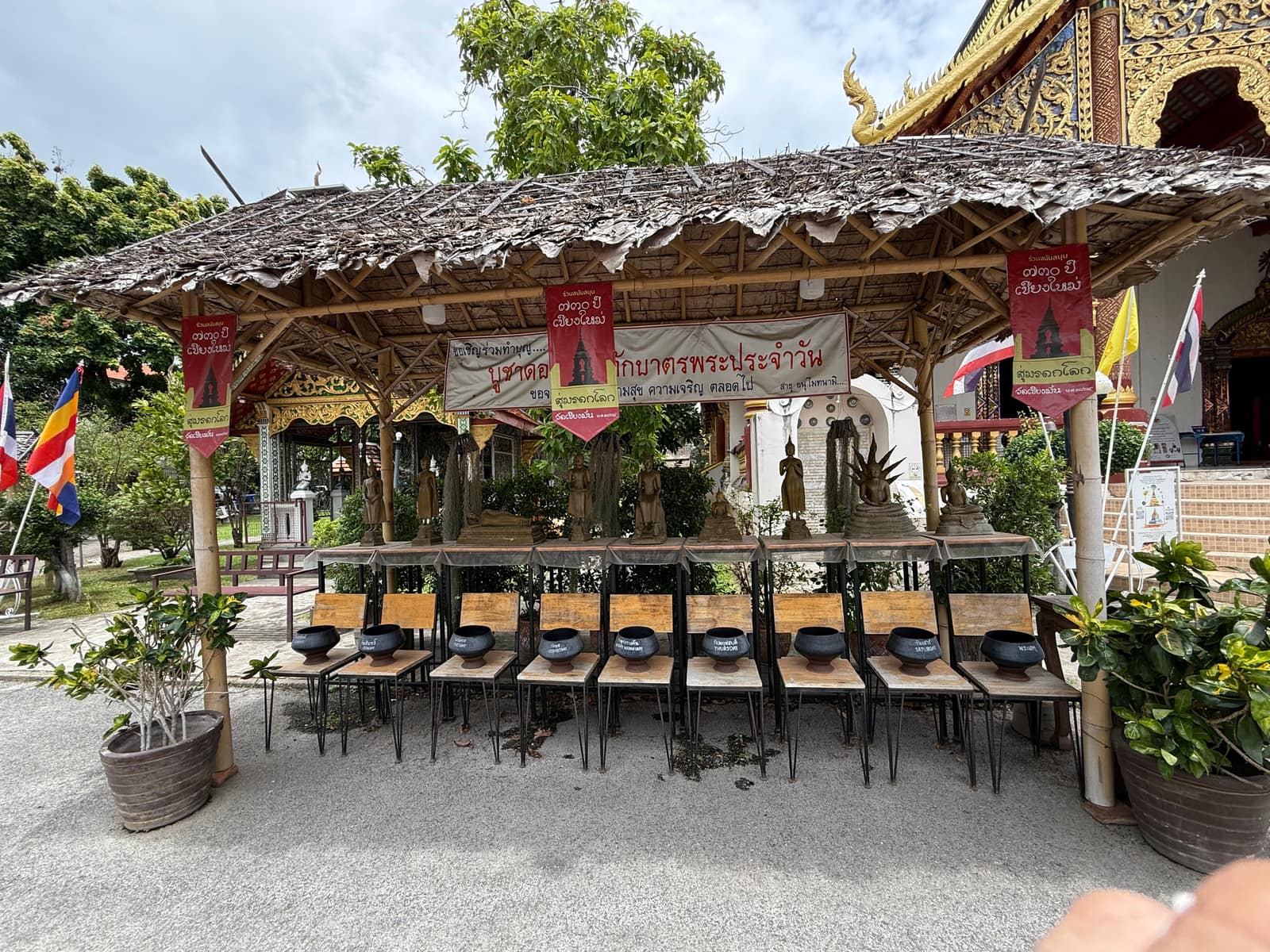
Wat Chiang Man is an active Buddhist monastery. Its monastic community and supporting caretakers oversee daily religious activities, access to worship halls and maintenance. Closely connected with Chiang Mai’s early history under King Mangrai, it remains a place of devotion for local people as well as a historic attraction.
Essential details and directions
- Attraction
- Wat Chiang Man
- Street address
- 171 Ratchapakhinai Rd, Old City, Si Phum, Mueang Chiang Mai District, Chiang Mai 50200, Thailand
About Wat Chiang Man and its custodians
Wat Chiang Man is an active Buddhist temple, cared for through its monastic community and temple support network. It should be understood as an ongoing religious place rather than a museum or a single preserved building. Repairs and additions across the centuries make its mixed architectural layers part of its significance.
Chedi Chang Lom: the elephant-supported base
The chedi is the most recognisable element of the compound. Stucco elephant forms emerge from its base and visually support the upper stupa. The design links Buddhist monument-building with Lanna ideas of power, guardianship and permanence.
- Stand back to see the relationship between the square base and rounded upper levels.
- Move around the perimeter without touching or climbing the elephants.
- Compare the surface textures, stucco repairs and gilded summit.
Timber roofs, naga details and hall layout
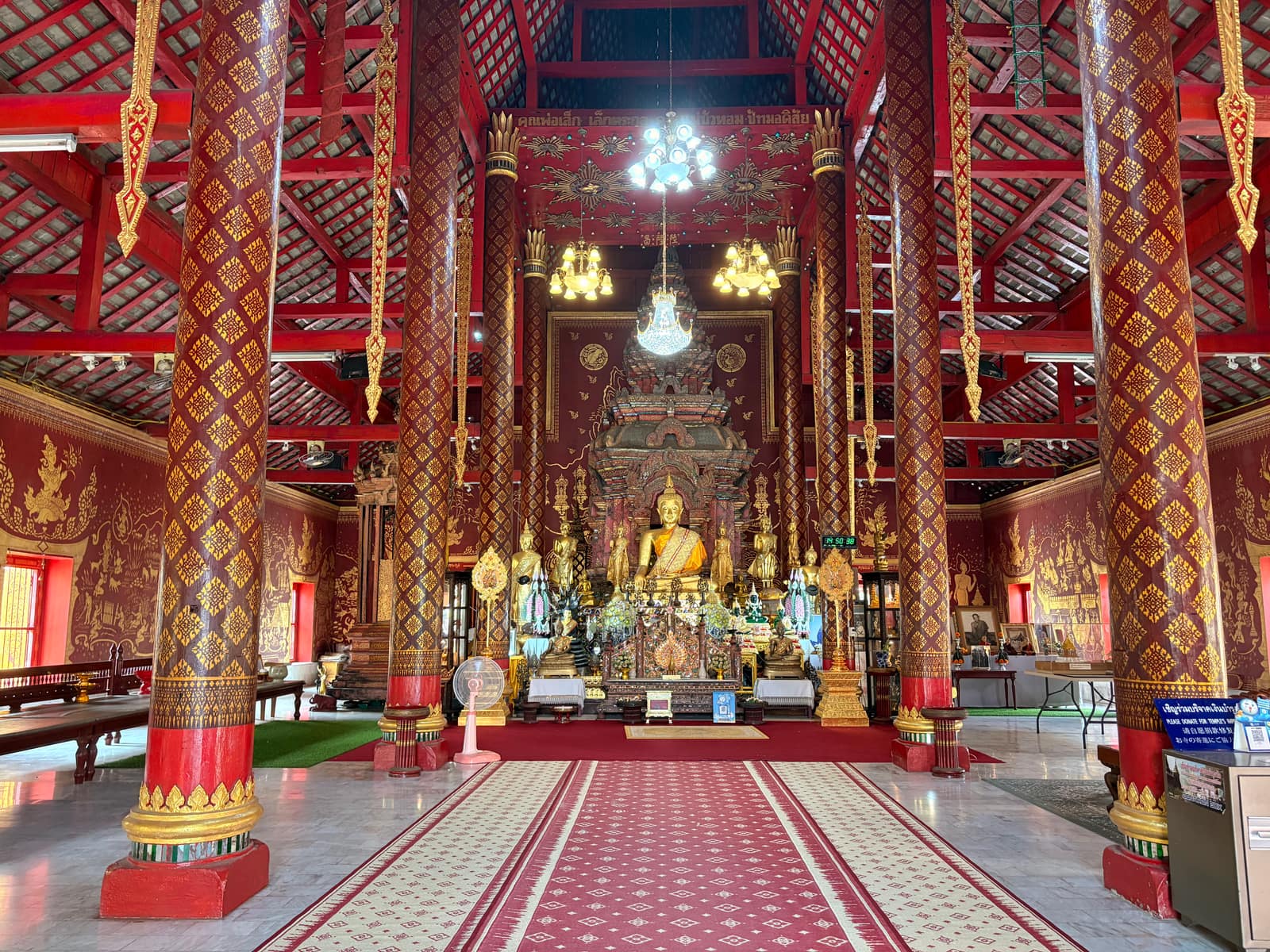
The temple halls show layered rooflines, carved gables and decorative entrances associated with northern Thai craftsmanship. The ordination hall (ubosot) serves a different ritual function from the larger assembly hall (viharn).
- Look up at the overlapping eaves and finials before entering a building.
- Notice raised thresholds and boundary markers around the ordination area.
- Respect closed doors: a building may be used for worship or monastic activity.
Phra Sila and Phra Kaeo Khao
The temple is associated with the Phra Sila stone Buddha relief and the small crystal image often called Phra Kaeo Khao or Phra Setang Khamani. Both are important devotional objects, with traditions that extend beyond their visual scale.
- Treat dates and origin stories attached to the images as temple traditions where historical evidence varies.
- View only from areas open to visitors; displays can change for ceremonies.
- Avoid flash, touching cases or blocking worshippers.
A four-stop architecture walk
Start in the courtyard, circle the chedi slowly, compare the viharn rooflines, then finish near the ordination hall. This sequence takes about 45 minutes if you pause for sketches or photographs.
- Stop 1: wide photograph of the chedi and its base.
- Stop 2: close observation of the elephant stucco from the walkway.
- Stop 3: view carved gables and layered roof edges.
- Stop 4: read any available interpretation and observe the devotional setting quietly.
Photography and further reading
Late-afternoon side light can make surface relief easier to see. Do not enter restricted halls to chase a particular angle. For a broader chronology, continue to the history guide; for the dress code and access information, see the visitor guide linked below.
Frequently asked questions
What is unusual about the Wat Chiang Man chedi? +
Its base is decorated with projecting elephant figures that appear to support the stupa above.
Is the whole temple from 1296? +
No. The temple has an early foundation, but surviving structures reflect later repairs and rebuilding.
Where are the crystal and stone Buddhas? +
They are associated with the temple halls; availability for viewing can vary with religious activities.
Keep reading
Wat Chiang Man visitor guide: dress code, etiquette and worship
→ Read the guideWat Chiang Man history and the three things to see
→ Read the guideHow to get to Wat Chiang Man
→ Read the guideWhat to see near Wat Chiang Man
→ Read the guideWat Chiang Man entrance fee, opening hours and practical details
→ Read the guideHalf-day walking route from Wat Chiang Man through Chiang Mai Old City
→ Read the guideThree Kings Monument: Chiang Mai’s founding story and civic square
→ Read the guideWat Chedi Luang: the monumental brick stupa of Chiang Mai
→ Read the guideWat Phra Singh: ornate Lanna halls and a gilded chedi
→ Read the guideWat Lam Chang: an elephant-linked temple in northern Chiang Mai Old City
→ Read the guideChiang Mai City Arts & Cultural Centre: history inside the former civic building
→ Read the guideWat Inthakhin Sadue Mueang: the temple of the city’s navel
→ Read the guide